Зірки та творці шоу
Henry McGee Tribute
by William Brown

Page 1
Henry McGee (1929 - 2006)
IMDB Entry
Left: Henry McGee interviews Chow-Mein in
"At Home With Henry McGee".
Broadcast: Nov. 24, 1971.
Henry Henry McGee, longtime straight
man to Benny Hill and anchor of the show's "core cast" which also
consisted of Bob Todd and Jackie Wright, died on Saturday, Jan. 28, 2006
after a battle with Alzheimer's disease. His age was given as 77."At Home With Henry McGee".
Broadcast: Nov. 24, 1971.

Left: Henry McGee as Cliff Michelmore in the
'Holiday' sketch of March 16, 1983.
He was born in Kensington, London, with an ancestry going back as far
as the 18th-century stage actress Kitty Clive; he was educated at
Stonehurst and got into acting after serving in the British Navy. Early
in his career, he had been in the Comédie Française,
playing a spear carrier in his first role and going on to Feydeau
farces; and another early role was a two-week stint in the long-running
London stage play, Agatha Christie's The Mousetrap, about which he later commented about his having the shortest stint in the longest-running show.'Holiday' sketch of March 16, 1983.

Left: Henry McGee in as Mad Dog in 'The B-Team'
Broadcast: January 2, 1985.
But it was on TV that Mr. McGee made his biggest impression. There
was his role as Mr. Pugh in the 1965-1970 Charlie Drake comedy series The Worker.
(Benny Hill, in his March 24, 1976 "Cooking with Fanee and Jonee
Claddock" sketch, actually made a reference to "Mr. Puuuuugh," which had
been the catchphrase in The Worker.) There was his playing opposite Ronnie Corbett (later, one-half of The Two Ronnies) in No, That's Me Over There!, which ran on Rediffusion London in 1967 and one more series on London Weekend in 1970. There was the 1973 comedy series Up the Workers
(the title of which Benny's Chow-Mein character called out at the end
of the "At Home with Henry McGee" sketch from Feb. 22, 1973). There was
working, on TV and/or stage, with the likes of such other figures of
British comedy as Tommy Cooper, Dick Emery, Jimmy Tarbuck, Dickie
Henderson, Frankie Howerd, Reg Varney (to whom Hill had once been
straight man on stage in the late 1940's), Eric Sykes, and The Goodies. There was his work on drama shows such as Z Cars and The Avengers. (His last known TV work was as "Goff Helliwell" in a 2003 episode of the long-running Last of the Summer Wine.) There were roles in films such as The Pink Panther, Holiday On The Buses and Carry On Emmannuelle.Broadcast: January 2, 1985.

Left: Henry McGee as Johnny Dankworth from
the 'Musical Favorites' Opening.
Broadcast: April 25, 1979.
But most famously, there was his work with Benny Hill, in the last three shows Hill ever did for the BBC
(on Nov. 20, 1968; Dec. 11, 1968; and Dec. 26, 1968); 45 out of the 58
hour-long comedy/variety shows Benny produced for Thames; Hill's very
last hour-long comedy show, the independently-produced Benny Hill's World Tour: New York, and the documentary Benny Hill: The World's Favourite Clown.
By McGee's own admission, it took him about two years to get
accustomed to Mr. Hill's style of comedy (presumably, this period
included the 1970-71 TBHS series on which he didn't
appear, during which alternating straight man Nicholas Parsons filled
the gap). But he finally fell into the rhythm of the Hill style, and
from 1973 to the show's demise appeared in all but two shows (March 13,
1974 and April 21, 1976).the 'Musical Favorites' Opening.
Broadcast: April 25, 1979.
(TRIVIA: McGee also had a role in the 1969 movie version of The Italian Job in which Mr. Hill co-starred, but they did not have any scenes together.)

Left: Henry McGee as he appeared in the "Phone In With Ludovic Kennedy and Humphrey Bumphrey".
Broadcast: Dec. 5, 1973.
Mr. McGee - nicknamed "SuperStooge" or "Double-S" by the cast and
crew - had an appearance that no-one could forget. His distinctive
vocal delivery. His particular clipped appearance. His ability to
convey unflappability in the face of idiocy whether coming from Fred
Scuttle, Chow-Mein or various sundry characters (Irishmen, people with
colds, etc.). His character roles, whether as artist managers in the
Middle Ages, or bumpkin idiots, or the occasional impersonation (news
broadcaster Ludovic Kennedy, radio disk jockey Kenny Everett, travel
show cohort John Carter) were as memorable as his straight-man
endeavors. And of course, his opening announcement: "Yes, it's The Benny Hill Show . . . "Broadcast: Dec. 5, 1973.
He is the third person in this core cast in the Hill stock company
(known within Hill players as "the family") to pass on, following
little, bald Irishman Jackie Wright (who died in 1989) and tall, bald
Bob Todd (who passed away in 1992). Not to mention The Lad Himself,
Benny Hill ("The Lad Himself, Benny Hill?" "I said not to mention him!")
- plus Rita Webb, Patricia Hayes and some others . . .
Jackie Wright Tribute

Due to popular demand, we now present a tribute to that little man that Benny was always slapping on the back of the head, little Jackie Wright. William Brown has provided an excellent tribute to one of Benny's key members of the series. Thanks, William!


Dennis Kirkland Tribute

Dennis Kirkland, the seventh and final producer / director of The Benny Hill Show, under whose watch the Hill's Angels first came into being, died after a brief illness on February 16, 2006 in London. He was 63 years old.
Jackie Wright Tribute
by William Brown
Page 2
Jackie Wright 1905 - 1989
IMDB EntryDue to popular demand, we now present a tribute to that little man that Benny was always slapping on the back of the head, little Jackie Wright. William Brown has provided an excellent tribute to one of Benny's key members of the series. Thanks, William!
Jackie Wright as "Filbert" in "Big Poppa"
Broadcast: March 25, 1981
As much a fixture of The Benny Hill Show as Hill
himself, his supporting core of Henry McGee, Bob Todd, Nicholas Parsons
et al, and the Hill's Angels, was a 4' 11" bald Irishman named Jackie
Wright. With his ravaged face (and pronounced - and sometimes
unintelligible - Ulster-accented voice), and a shiny bald pate that
regularly made him a target of head slappings from Benny and various
other sundry individuals, Jackie became a legend on a par with the other
cast members, with such routines as "Jackie Wright's Holiday" (in
which, to save £1 on a holiday to a foreign country, he ends up on a
trip to hell) and the parody of the game show Name That Tune
(with Jackie as a contestant given the short shrift by Benny's smarmy
game-show host, and ending up with the girl who "won") passing into
legend.Broadcast: March 25, 1981
Jackie Wright as Prefect in "Superteech"
Broadcast: Jan. 5, 1983.
John (Jackie) Wright was born in 1905 in Belfast, Northern Ireland,
one of twelve children. The details of his early life are sketchy, but
this much is known: Early on, he was a car-body builder in the auto
manufacturing trade, and at one point was in America, upholstering
Cadillacs; also spending his spare time in speakeasies playing trombone
(as he would do in the March 23, 1977 "At the Streaker's Ball" number)
and tap dancing. When the Depression hit, he was so poverty-stricken
that he pawned his trombone and made his way back to Ireland where for
the next few decades he travelled the country as a music-hall trombonist
and supporting comic; during World War II he played trombone in the
Belfast Home Guard.Broadcast: Jan. 5, 1983.
Jackie Wright in "Yeild To The Dawn"
Broadcast: April 25, 1979.
It was in the 1930's that he became bald, which he first noticed
whilst working in Canada; for a time he billed himself as "Jackie
Wright, The Bald Bombshell." But it wasn't until the 1960's that he
first appeared on television, initially as an extra on such shows as Z Cars.
It was from his appearances on these programmes that he first came to
the attention of Benny Hill, who picked his supporting players as much
on the basis of their "visual value" as on their comedic skills and
their ability to work with him. Mr. Wright appeared in the last three
editions of TBHS to air on the BBC in 1968; on which McGee, Todd and Jenny Lee-Wright also débuted with Mr. Hill. On that final BBC
series, plus Hill's first Thames series, he was billed as John Wright;
but because of a few character actors already named John Wright
(including one, in Britain, named John C. Wright), the "little bald guy"
had his billing changed, effective with Mr. Hill's Oct. 28, 1970
special, to the more recognisable Jack Wright - although Benny would always call him "Little Jackie."Broadcast: April 25, 1979.
Jackie Wright in "Name That Tune?"
Broadcast: April 16, 1980.
Initially a recipient of constant - and consistent - head-tappings in
silent sketches (the "Lower Tidmarsh Hospital Service" from Mr. Hill's
first Thames special of Nov. 19, 1969, for example; or the first "Hotel
Splendide" sketch from Feb. 4, 1970), within a few years Mr. Wright was
given speaking parts on the show, with his Irish brogue becoming every
bit as prominent as the head-slappings. One of the earliest showcases
for Jackie in this regard was the March 29, 1973 "Baby Lover" song in
the "Dalton Abbott Railway Choir" sketch, with Benny as one of the most
obnoxious, front-and-center background singers in history. And not long
after that, Mr. Wright would also be handling impersonations, which
provided a marked contrast to Mr. Hill's. Unlike Benny who would bury
himself in whoever he was playing, Jackie always sounded like Jackie
regardless of who he was "impersonating" (football [soccer] legend
Georgie Best, Antonio Fargas' "Huggy Bear" character from Starsky & Hutch,
singer/songwriter Lynsey De Paul, Peter Falk's "Lt. Columbo," Cuban
dictator Fidel Castro, or anybody from the U.S., just as a few
examples). In addition, in one memorable moment on the March 23, 1977
show, the "Somethin' 'Bout You Baby I Like" section of the "Girls,
Girls, Girls" sketch, was a reversal of the usual Hill show formula when
Jackie repeatedly slapped Benny on the head! After the Dec. 17, 1975
episode, he would be moved up in casting order, not being billed lower
than third in the supporting cast (with the exception of March 23, 1977
when he was credited fourth behind McGee, Rita Webb and guest Dilys
Watling) for the rest of his run with the show.Broadcast: April 16, 1980.
Jackie Wright as Charles Aznavour from the
"Another Host of Your Favourite Stars" sketch.
Broadcast: Dec. 17, 1975.
But TBHS
was by no means Mr. Wright's sole credit; during his run with the show
he also appeared in the short-lived Frankie Howerd sitcom Whoops Baghdad, as well as with comedians Dick Emery and Jim Davidson; in addition, in 1975 he played an "old man" in a film called Three for All,
which may explain his absence from the Sept. 24, 1975 show on which Don
Estelle filled in for him (the episode was produced in March of that
year). In 1978 he made a first attempt at retirement, skipping the Dec.
26, 1978 edition (on which Johnny Vyvyan, who'd appeared with Hill a
few times in the 1950's and 1960's, subbed for him); but within a few
months he was so bored that he asked to return and was welcomed back
with the proverbial open arms. (His initial attempt at retirement would
explain his absence from the filmed segments of the two 1979 shows on
which he appeared in the studio segments.)"Another Host of Your Favourite Stars" sketch.
Broadcast: Dec. 17, 1975.
Jackie Wright as Lt. Columbo, from the
"Murder on the Oregon Express" skech.
Broadcast: March 24, 1976.
Wright was a teetotaller, as well as
being an inveterate eater, tea drinker and chain-smoker (he would often
show up for filming or taping with a cigarette in one hand and a packet
of crisps in the other; yet he didn't seem to put on any weight, unlike
Hill). As of the early 1980's, Jackie lived in a bedsitter in London
for half of the year when TBHS
was being produced, and the other half of the year lived in his native
Belfast with his sister Lily. And after Hill's show made it into the
United States in 1979, Wright became an international superstar on a par
with Hill himself, to such an extent that a Jackie Wright fan club
sprung up in the States, and he was receiving offers to star in his own
TV show. He shared a few traits with Hill: Both never married, and
they each had an apparent indifference to money, with a drawer of
uncashed royalty checks for U.S. repeats sent to Jackie discovered by
his sister."Murder on the Oregon Express" skech.
Broadcast: March 24, 1976.
Jackie Wright as Fidel Castro, from the "Bionic Baby" skech.
Broadcast: Jan. 26, 1977.
But inevitably, time caught up with little Jackie. The 1983 series
was the last in which he appeared full-time. He did filmed sketches for
the 1984 series and a few quickies for the first edition of same, but
would be unable to participate any further due to declining health,
dating back to a stomach operation after which he started feeling
"poorly" (per the British vernacular); not long afterwards, he fell and
broke a leg and some ribs, and not long after that, he fell and broke
his hip while walking down the street; he would be in racking pain
thereafter. Leftover footage dating back to filming of the 1982 series
with Wright in it would be aired as late as the 1985 series, so that
royalty checks would still be coming his way; but an era irrevocably
came to an end with his illness-induced retirement. A few others came
afterwards (such as Len Keyes, Sydney Arnold and ex-acrobat Johnny
Hutch), but none with the same effects or appeal.Broadcast: Jan. 26, 1977.
Jackie Wright as "Huggy Bear" from
the "Husky and Starch" sketch.
Broadcast: March 23, 1977.
Jackie
Wright died after a long illness in a Belfast hospital in January of
1989 at age 83. At the time of his death, Benny Hill remarked, "He was a
lovely little fella . . . I'm saddened beyond words."the "Husky and Starch" sketch.
Broadcast: March 23, 1977.
Dennis Kirkland Tribute
by William Brown
Page 3
Dennis Kirkland (1942 - 2006)
IMDB EntryDennis Kirkland, the seventh and final producer / director of The Benny Hill Show, under whose watch the Hill's Angels first came into being, died after a brief illness on February 16, 2006 in London. He was 63 years old.
Born in North Shields, Northumberland, Kirkland started
out appearing in ITV adverts as a child. His behind-the-scenes career
began as a props man for Tyne Tees Television, and he had spells with
the Royal Opera House and the Windmill Theatre in London prior to
becoming an assistant floor manager with ATV,
where he was employed at the time a certain Benny Hill was hosting
three shows for the company (two editions of an Anglo-American
production called Spotlight which also ran in the U.S. on the CBS network in the summer of 1967, and one Benny Hill Show
on which Nicholas Parsons, Rita Webb and Bettine Le Beau all made their
Hill debuts). It is believed that it was there that Mr. Hill and Mr.
Kirkland first met.
When Thames started up in 1968, Kirkland became floor
manager for the new company, and served in that capacity for the
programme in the early years of Benny's association with the firm. His
first credit on the show was as "Programme Associate," on the Feb. 22,
1973 and March 29, 1973 editions, then he served as warm-up man for the
show for the next five years. In the meantime, he had moved up the
ranks, and was producing shows such as Rainbow, The Tomorrow People, and the sketch comedy show What's On Next? which featured some once and/or future Hill players in its cast.
Finally, with the March 14, 1979 edition Kirkland became the seventh producer/director of TBHS
in its Thames run, producing every remaining edition of the show,
ultimately serving as long as the first six producer/directors combined,
and ending up also exceeding the run of Kenneth Carter who produced Mr.
Hill on and off at both the BBC and ATV
during the period 1955-1968. Hill's relationships with his prior
producers had been often contentious and tumultuous, but he and Kirkland
- described in one of the Hill books as "a Geordie with a bubbly sense
of humor" - would hit it off right away (becoming one of the comedian's
closest friends off the set as well), to the very end.
Under Kirkland's watch, the technical standards of the
show improved steadily, and the programme began moving away from the
verbal-based humor which was Benny's forte up to that time and more
towards what Dennis liked to call "comedy without words." During his
run with the Hill show, Kirkland also worked with the likes of Ken Dodd,
Jim Davidson and, significantly, Eric Sykes, whose 1979 comedy The Plank won at Montreux; the two also collaborated on two other projects, It's Your Move and Mr. H Is Late, the latter of which also featured longtime Hill straight man Henry McGee.
The most controversial aspect of Kirkland's run as Hill's
producer/director was the introduction, in 1980, of Hill's Angels. He
had begun to move the show in that direction with the March 14, 1979
"Hot Gossamer" takeoff, but within a year of the Angels' introduction
the entire show became a lightning rod for feminists, "alternative"
comics and other special-interest groups that claimed Mr. Hill had
promoted the objectification and degradation of women in his work.
Efforts to tone down the sexual aspects of the show after 1984 ended up
to no avail, and after years of declining ratings (and the further
entrenchment of a climate of "political correctness") Thames cancelled TBHS
in 1989. Forever after, Kirkland never forgave the company for what he
called the "sacking" of Hill, and what he characterized as the
"hypocrisy" of Thames still making millions off of foreign sales.
Kirkland's own career suffered afterwards (his
association with Thames ended not long after the Hill show's demise), in
no small part due to his blunt outspokenness, and also due to the
"comedy without words" format he had expounded falling out of fashion in
Britain. He did produce and direct Benny Hill's World Tour: New York
which aired in the U.S. in 1991 and in Britain (in two parts) in 1994,
and he was to direct a new series of Hill shows for Central TV at the
time of Benny's death (in fact, it was he who discovered Benny's dead
body at the latter's Teddington flat on April 20, 1992); after which,
Dennis ended up directing a series of shows fronted by Freddie Starr
which critics called "The Benny Hill Show without Benny." His most recent credit, three years ago, was of an Irish comedy show, Fear an Phoist.
After Benny's death in 1992, Kirkland wrote a book about
his years producing and directing the Hill show, and his long friendship
with the comedian, Benny: The True Story (co-written with Hilary Bonner; later republished as The Strange and Saucy World of Benny Hill).
In the book, he claimed that Sue Bond (who was on the show from 1970
to 1973) was "the first Hill's Angel," and even listed Diana Darvey as
an Angel, though both were long gone from the show by the time the
Angels actually came into being.
But regardless of what one feels or thinks of his direction of the show, Dennis Kirkland's legacy in the long history of The Benny Hill Show will live on forever.
Special thanks to William Brown for supplying this tribute.
A Tribute to

Non Pop-Up Gallery
In order to accomodate those who do not have Pop-Up Support in their browsers, there are two links for each gallery. The Photos in the gallery are 235 pixels wide by 170 pixels high.


1. from the end of the "Dancing In The Nude" number from April 21, 1976. From left: Claire Lutter (qv), Libby Roberts (qv), Teresa (Terry) Lucas, and Jane Eve (Colthorpe).
2. From their "Think Of The Boys" number of Feb. 23, 1977, which spotlighted their vocal as well as terpsichorean talents; by which time a cute redhead named Lorraine Doyle (qv) had joined the troupe [from left: Jane, Terry, Lorraine, Libby and Claire]. It is widely regarded that their dance routines would pave the way for the future addition of the Hill's Angels to the show. Note: Click The Top Two photos for a larger image.
3. Libby Roberts IMDB Entry
4. Teresa (Terry) Lucas IMDB Entry
5. Claire Lutter IMDB Entry
6. Jane Eve (Colthorpe) IMDB Entry
(who would be known after 1982 as Jane Newman; her other credits, under both names, include Kenny Everett's TV shows, as a member of the "Hot Gossip" dance troupe; the 1980 Village People movie Can't Stop the Music; and the 1983 Monty Python film The Meaning of Life).
7. Lorraine Doyle IMDB Entry
TRIVIA NOTE: An early member of the Machine was future TBHS cast member Sue Upton, but she had left the troupe before either they or she were booked onto the program for their respective first times. As noted elsewhere, two of the Love Machinists would later be involved with the Angels, in different capacities: Ms. Doyle, as the most prominent after Ms. Upton (especially following the departure of Louise English from the series in 1986); and Ms. Roberts, as Angels choreographer from Jan. 16, 1984 to the end (including the independently-produced New York special). Closeups of individual members at left: (all from April 21, 1976, except for the shot of Lorraine from Feb. 23, 1977).


Three shots of the lovely Lorraine Doyle, (top) from the Hill's Angels Photocall bit of April 5, 1989; (middle) from one of the 1985 "Just Married" quickies. First appeared on TBHS in 1977 as part of the Love Machine (qv) dancing/singing troupe, and that same year made an impression as (bottom), "Slimey Sally" in the now-famous "Husky & Starch" bit. (To see how she appeared back then, go to the Love Machine entry elsewhere in Who's Who.) She is one of only two known individuals to have been in both Love Machine and Hot Gossip, the other being Jane Eve (Colthorpe); but whereas Jane was a mainstay for several years, Lorraine was in and out of the latter troupe over the years, with at least one period (in 1981) where they toured together, though neither were in the latter outfit at the same time. Also did much stage and TV, as well as being one of the dancers in the 1984 movie Indiana Jones and the Temple of Doom, before returning to TBHS full-time starting with the 1985 series; by which time her old Love Machine mate, Libby Roberts (qv), had become the Hill's Angels choreographer. Ms. Doyle quickly rose to prominence among the cast, eventually becoming the second most prominent Hill's Angel after Sue Upton, especially in the wake of Louise English's departure from the series in 1986. Lorraine's other major TV work besides the Hill show was in the role of "Jackie" in the sitcom Executive Stress (whose star, Penelope Keith, had co-starred with one-time-only TBHS guest Paul Eddington (qv) in The Good Life, a.k.a. Good Neighbors). For more about her life and career, click on the Love Machine Q&A section.


Top: from the Feb. 23, 1977 Love Machine "Think of the Boys" musical number and Bottom, from the Feb. 18, 1976, "Transistor Radio" sketch. The Felixstowe native first joined the Machine in 1975, just prior to their first appearance on TBHS (she came in following the departure from the group of future Hill mainstay Sue Upton). After the Machine disassembled in 1979, Jane joined the racy dance troupe Hot Gossip which appeared on both Kenny Everett's Thames Video Show and BBC Television Show; she followed in the footsteps of fellow ex-Machinist (and future Hill's Angel) Lorraine Doyle (qv) who'd been a Hot Gossiper the year before; but unlike Ms. Doyle whose run was somewhat brief, Jane lasted with the group well into the mid-'80's. She and the other Hot Gossip dancers as constituted at the time appeared in the 1980 Village People turkey Can't Stop the Music, on which she was credited as Jane Margaret Colthworphe (the spelling of her surname in the credits of that flick appeared a bit too outlandish to be true - and indeed, it was; however, the BFI database has her surname spelled correctly in connection with this film credit). For many years after 1982, she was known as Jane Newman, her first major credit as such being in Monty Python's The Meaning of Life (1983; she was one of the many dancers who participated in the "Christmas in Heaven" musical number). She remained with the Everett show as a featured player in sketches after her run with Hot Gossip ended. There is a page which has some other info about her at the point of her Hot Gossip run, c. 1983 at www.early-sarah-brightman.com.


Two stills of Love Machinist Teresa Lucas, both from their "Think of the Boys" number of Feb. 23, 1977. An original member of the group, and known as Terry for short, she was as adept in comedy sketches as in the Machine's dance routines. Her own name was used in the "long-jump" routine of the Feb. 18, 1976 "Word of Sport" sketch in which she (and her fellow Love Machinists) appeared. She was also mentioned in an advert put in The Stage and Television Today in 1982 after the dance troupe Lipstick (which she and her fellow ex-Machinist, Libby Roberts, choreographed at the time before taking over the helm of the Angels) performed at a Royal Gala Performance before HRH Princess Alexandra in Reading, England, on June 13, 1982; at the bottom of the ad was this contact info: "Enquiries to Libby Roberts or Teresa Lucas."

From the "Chow Mein Package Tours" sketch of 3/23/77, is Claire Lutter. She later played a prostitute in the ill-fated Sean Penn/Madonna vehicle Shanghai Surprise. Here is a link to her page at www.gridmodels.homestead.com

Here we have one of The Love Machinists, Libby Roberts, as seen here from the "Sale of the Half-Century" parody of April 21, 1976, who went on (from 1984 onwards) to be the Hill's Angels' choreographer (she succeeded Linda Finch, ex-regular Roger's sister). Her son, Adam Johnstone, was one of the "Hill's Little Angels" who appeared in the 1988 and '89 series of TBHS (and also the independently-produced "New York" special).
A Tribute to

Diana Magdalene Roloff
IMDB Entry
I wish I had more information on this very special lady. She appeared on The Benny Hill Show as a singer and dancer with Benny, but she also did some sketches, most notably, "The Catch" which was a parody of "The Sting". This page is affectionately dedicated to this remarkably talented woman and entertainer. Please feel free to pass along any information you may have.
In order to accomodate those who do not have Pop-Up Support in their browsers, there are two links for each gallery. The Photos in the gallery are 500 pixels wide by 357 pixels high.
Former Benny Hill Show star Diana Darvey has died at the age of 54 following a fall at her home.

Bob Todd Tribute


A Tribute to
Love Machine
Page 4
Photo Gallery (Requires Javascript)
Pop-Up GalleryNon Pop-Up Gallery
In order to accomodate those who do not have Pop-Up Support in their browsers, there are two links for each gallery. The Photos in the gallery are 235 pixels wide by 170 pixels high.
Featuring: Claire Lutter, Libby Roberts, Teresa Lucas, Jane Eve (Colthorpe) & Lorraine Doyle
Love Machine
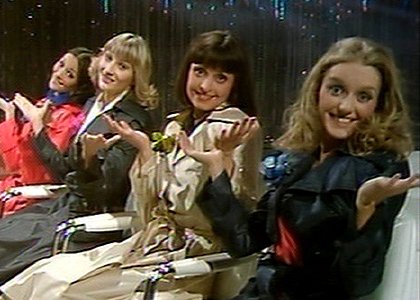
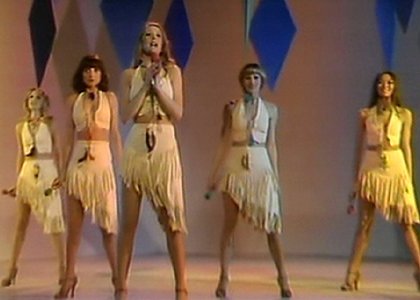
The dancing and singing troupe Love Machine:1. from the end of the "Dancing In The Nude" number from April 21, 1976. From left: Claire Lutter (qv), Libby Roberts (qv), Teresa (Terry) Lucas, and Jane Eve (Colthorpe).
2. From their "Think Of The Boys" number of Feb. 23, 1977, which spotlighted their vocal as well as terpsichorean talents; by which time a cute redhead named Lorraine Doyle (qv) had joined the troupe [from left: Jane, Terry, Lorraine, Libby and Claire]. It is widely regarded that their dance routines would pave the way for the future addition of the Hill's Angels to the show. Note: Click The Top Two photos for a larger image.
3. Libby Roberts IMDB Entry
4. Teresa (Terry) Lucas IMDB Entry
5. Claire Lutter IMDB Entry
6. Jane Eve (Colthorpe) IMDB Entry
(who would be known after 1982 as Jane Newman; her other credits, under both names, include Kenny Everett's TV shows, as a member of the "Hot Gossip" dance troupe; the 1980 Village People movie Can't Stop the Music; and the 1983 Monty Python film The Meaning of Life).
7. Lorraine Doyle IMDB Entry
TRIVIA NOTE: An early member of the Machine was future TBHS cast member Sue Upton, but she had left the troupe before either they or she were booked onto the program for their respective first times. As noted elsewhere, two of the Love Machinists would later be involved with the Angels, in different capacities: Ms. Doyle, as the most prominent after Ms. Upton (especially following the departure of Louise English from the series in 1986); and Ms. Roberts, as Angels choreographer from Jan. 16, 1984 to the end (including the independently-produced New York special). Closeups of individual members at left: (all from April 21, 1976, except for the shot of Lorraine from Feb. 23, 1977).
Lorraine Doyle
IMDB EntryThree shots of the lovely Lorraine Doyle, (top) from the Hill's Angels Photocall bit of April 5, 1989; (middle) from one of the 1985 "Just Married" quickies. First appeared on TBHS in 1977 as part of the Love Machine (qv) dancing/singing troupe, and that same year made an impression as (bottom), "Slimey Sally" in the now-famous "Husky & Starch" bit. (To see how she appeared back then, go to the Love Machine entry elsewhere in Who's Who.) She is one of only two known individuals to have been in both Love Machine and Hot Gossip, the other being Jane Eve (Colthorpe); but whereas Jane was a mainstay for several years, Lorraine was in and out of the latter troupe over the years, with at least one period (in 1981) where they toured together, though neither were in the latter outfit at the same time. Also did much stage and TV, as well as being one of the dancers in the 1984 movie Indiana Jones and the Temple of Doom, before returning to TBHS full-time starting with the 1985 series; by which time her old Love Machine mate, Libby Roberts (qv), had become the Hill's Angels choreographer. Ms. Doyle quickly rose to prominence among the cast, eventually becoming the second most prominent Hill's Angel after Sue Upton, especially in the wake of Louise English's departure from the series in 1986. Lorraine's other major TV work besides the Hill show was in the role of "Jackie" in the sitcom Executive Stress (whose star, Penelope Keith, had co-starred with one-time-only TBHS guest Paul Eddington (qv) in The Good Life, a.k.a. Good Neighbors). For more about her life and career, click on the Love Machine Q&A section.
Jane Eve (Colthorpe)
IMDB EntryTop: from the Feb. 23, 1977 Love Machine "Think of the Boys" musical number and Bottom, from the Feb. 18, 1976, "Transistor Radio" sketch. The Felixstowe native first joined the Machine in 1975, just prior to their first appearance on TBHS (she came in following the departure from the group of future Hill mainstay Sue Upton). After the Machine disassembled in 1979, Jane joined the racy dance troupe Hot Gossip which appeared on both Kenny Everett's Thames Video Show and BBC Television Show; she followed in the footsteps of fellow ex-Machinist (and future Hill's Angel) Lorraine Doyle (qv) who'd been a Hot Gossiper the year before; but unlike Ms. Doyle whose run was somewhat brief, Jane lasted with the group well into the mid-'80's. She and the other Hot Gossip dancers as constituted at the time appeared in the 1980 Village People turkey Can't Stop the Music, on which she was credited as Jane Margaret Colthworphe (the spelling of her surname in the credits of that flick appeared a bit too outlandish to be true - and indeed, it was; however, the BFI database has her surname spelled correctly in connection with this film credit). For many years after 1982, she was known as Jane Newman, her first major credit as such being in Monty Python's The Meaning of Life (1983; she was one of the many dancers who participated in the "Christmas in Heaven" musical number). She remained with the Everett show as a featured player in sketches after her run with Hot Gossip ended. There is a page which has some other info about her at the point of her Hot Gossip run, c. 1983 at www.early-sarah-brightman.com.
Teresa Lucas
IMDB EntryTwo stills of Love Machinist Teresa Lucas, both from their "Think of the Boys" number of Feb. 23, 1977. An original member of the group, and known as Terry for short, she was as adept in comedy sketches as in the Machine's dance routines. Her own name was used in the "long-jump" routine of the Feb. 18, 1976 "Word of Sport" sketch in which she (and her fellow Love Machinists) appeared. She was also mentioned in an advert put in The Stage and Television Today in 1982 after the dance troupe Lipstick (which she and her fellow ex-Machinist, Libby Roberts, choreographed at the time before taking over the helm of the Angels) performed at a Royal Gala Performance before HRH Princess Alexandra in Reading, England, on June 13, 1982; at the bottom of the ad was this contact info: "Enquiries to Libby Roberts or Teresa Lucas."
Claire Lutter
IMDB EntryFrom the "Chow Mein Package Tours" sketch of 3/23/77, is Claire Lutter. She later played a prostitute in the ill-fated Sean Penn/Madonna vehicle Shanghai Surprise. Here is a link to her page at www.gridmodels.homestead.com
Libby Roberts
IMDB EntryHere we have one of The Love Machinists, Libby Roberts, as seen here from the "Sale of the Half-Century" parody of April 21, 1976, who went on (from 1984 onwards) to be the Hill's Angels' choreographer (she succeeded Linda Finch, ex-regular Roger's sister). Her son, Adam Johnstone, was one of the "Hill's Little Angels" who appeared in the 1988 and '89 series of TBHS (and also the independently-produced "New York" special).
A Tribute to
Diana Darvey
Page 5
Diana Magdalene Roloff
21 April 1945 - 11 April 2000
IMDB EntryI wish I had more information on this very special lady. She appeared on The Benny Hill Show as a singer and dancer with Benny, but she also did some sketches, most notably, "The Catch" which was a parody of "The Sting". This page is affectionately dedicated to this remarkably talented woman and entertainer. Please feel free to pass along any information you may have.
Photo Gallery (Requires Javascript)
Pop-Up Gallery | Non Pop-Up GalleryIn order to accomodate those who do not have Pop-Up Support in their browsers, there are two links for each gallery. The Photos in the gallery are 500 pixels wide by 357 pixels high.
Update: December 6, 2006
William Brown has done more research on Diana and here is another obituary on this special lady. It was written by her second husband.Diana Darvey Obituary from The Stage
London, England, April 20, 2000.Former Benny Hill Show star Diana Darvey has died at the age of 54 following a fall at her home.
She began her career at the age of 15 as a dancer in pantomime at Bath. Her mother, Pamela Cooper, had danced at the Windmill.
A spell as a Redcoat followed before Darvey toured Sweden
and Spain with a London ballet troupe. She enjoyed Sweden, but fell in
love with Spain and proved a hit with audiences. When the tour ended,
she settled there and topped the bill in revista under the great Spanish
impresario Colsada.
The following decade, she starred in Spanish musical
theatre before being spotted by Hill in the early seventies while he was
holidaying in Madrid.
She spent four happy and successful years on his show,
and in addition to having her own special spots, which she arranged,
choreographed and designed the clothes for, she was equally happy in
songs and sketches with Hill.
Her work can still be enjoyed on videos of shows from that period. - Ralph Barker
Update: March 21, 2005
I asked William Brown who is a contributing editor to this site if he could get more information on our darling Miss Darvey. He was able to get more information and here it is:
Apparently, she once ran a pub in Bodicote, Oxfordshire
(apparently within the last years of her life). At the time of her
1974-75 TBHS appearances,
she was represented by Hill's agent, Richard Stone; by the time of her
final appearance in 1977, she was represented by an agency called Al
Heath International. For a time in the early '80's, she and her
then-husband, Terry Gittings, were based in Miami Beach, Florida, where,
buoyed by the success of TBHS
in America, they had a joint cabaret act. I hereby quote an article
from The British Tourist (a South Florida publication), first published
in its July 1982 issue (page 14):
BENNY HILL TO CABARET
Glamorous Londoner Diana Darvey is well known to millions
not only in Britain but here in the U.S.A. too. She is appearing every
day on American television in one of the most popular TV series here
ever - the Benny Hill show.
Now Diana has made Miami Beach her new home and with
husband Terry Gittings, also from England, she is planning to augment
her TV success with live cabaret entertainment this summer for visitors
and residents in South Florida.
Diana spent the winter entertaining aboard a Caribbean
cruise liner operating out of Miami. Terry is a former drummer with
Georgie Fame who has performed around the world.
From now on they intend to do cabaret together on terra
firma. Diana is a singer-comedienne and her live show with Terry is an
hour-long cabaret with everything from sketches to song and dance.
"We've appeared all over Europe, Japan, the Far East and
Australia, so we know our routine appeals to international audiences,"
says Terry.
Diana Darvey Obituary
Recently, I was emailed an obituary on the late Diana
Darvey from Bob Jackson. This was posted in one of the Yahoo Groups by
the webmaster of SueUpton.net, Erik Larsen. The article was originally published in "The Independant".
Head Line Obituary: Diana Darvey
Sub-Heading
Publication Independent Date 27/05/2000
Byline Denis Gifford Source QUARK
Page nos. 7 Edition FOREIGN
Section Obituaries Supplement Review
Picture Storyno Picture Caption Darvey: `sexy knockout'
Copyright Flagno Copyright Info
Legal Warning Legal Warning Info
Sub-Heading
Publication Independent Date 27/05/2000
Byline Denis Gifford Source QUARK
Page nos. 7 Edition FOREIGN
Section Obituaries Supplement Review
Picture Storyno Picture Caption Darvey: `sexy knockout'
Copyright Flagno Copyright Info
Legal Warning Legal Warning Info
THE SEVENTIES
were the great years for Thames Television, the greatest
of all the ITV production companies, and their greatest star was Benny
Hill. His 60-minute specials were the best-written, best-produced and
funniest programmes of the week, the month, even the year. And, what's
more, they highlighted the prettiest girls.
But prettier than all of his Hill's Angels moulded into one was Diana
Darvey, for besides beauty she had enormous talent. Dennis Kirkland,
who rose from floor manager on the television show Looks Familiar to
be Hill's producer and co-writer, remembers Darvey as the lady who
would burst Benny's balloons at a single glance. "She was beautiful,
an absolute sexy knock-out on the TV screen," he recalls, "but - off-
screen - she was totally the unsexiest girl you've ever seen in your
life."
This contradiction in off- and on-screen personality I can vouch for.
Darvey was an unexpected added attraction to one of my panel game
shows, Quick on the Draw. This series was unique in that it starred
cartoonists who drew the answers to comedy questions posed and drawn
by the chairman, Bob Monkhouse. Newspaper cartoonists like Bill Tidy,
veteran comic artists like Ern Shaw, and strip artists like Frank
Bellamy were among those who drew funny cartoon answers alongside
such show- business stars as Spike Milligan and Jimmy Jewel, showing off
hitherto-unsuspected artistic talents.
Monkhouse, a former comic artist, was the perfect host, and it was he,
along with the producer, David Clark, who added Diana Darvey to my
format which, I must admit, was otherwise a somewhat sexless affair.
Her weekly hostessing of Quick on the Draw brought her regularly in
front of a new public, alongside her starrier appearances in The Benny
Hill Show, which began in early 1974.
It was in fact Benny Hill who discovered her and brought her back home
to Britain. He was taking one of his frequent holidays abroad, when he
saw her singing in a revue in Madrid. Immediately attracted by her
beauty of face, figure and voice, he was amazed to discover that she
was an English girl born and bred.
Diana Darvey was the daughter of a beautiful mother, Pamela Cooper,
one of the much admired Windmill Girls. Born Diana Roloff in 1945 in
Cheadle, Cheshire, she grew up and was educated in Bristol. Her father
died when she was only two years old, and when she entered show
business she took on the surname Darvey, from her mother's second
husband. This was later changed to Darvey.
Her first stage appearance came in 1962, as a dancing girl in a
pantomime staged in Bath. The following year she became a Butlin's
Redcoat, and then she joined a London ballet troupe. This took her out
of the country, first to Sweden, then to Spain. When an opportunity to
settle and work there came she leapt at it. A famous Spanish
impresario, Colsada, saw her and made her the star of his revue.
Openings in the Spanish musical theatre followed where, in time, she
was spotted by the holidaymaking Hill. Delighted to return to her
homeland, she dazzled the producers at Thames, who sought to use her
to the full.
Apart from her regular appearances on Quick on the Draw, she was
popped into the sitcom series . . . And Mother Makes Five, starring
Wendy Craig and Richard Coleman, and turned up in the cast of Carry On
Behind (1975), outshining in her beauty the likes of Elke Sommer, Liz
Fraser and Adrienne Posta.
But it was in the Hill shows that she truly shone, both as a
participant in his sketches and, especially, as a singing star. The
climax to her long run of solo spots was a five-minute sequence of her
own devising in which she sang a skilful continuity of five different
songs in three languages, Spanish, French and English. She appeared in
five different costumes, all of which she designed herself. Nothing
sexier had ever been seen on a British television screen. "She
designed her dresses with splits from thigh to elbow," sighed
Kirkland. "You don't see girls like that these days."
Diana Magdalene Roloff (Diana Darvey), actress: born Cheadle, Cheshire
21 April 1945; married first Terry Gittings (marriage dissolved),
second 1995 Ralph Barker; died Redhill, Surrey 11 April 2000.
Denis Gifford died c18 May 2000
Denis Gifford died c18 May 2000
Robert Jackson,
156 Grahams Road,
Christchurch 8005,
NEW ZEALAND
156 Grahams Road,
Christchurch 8005,
NEW ZEALAND
Left to Right:
Robert Furlong, Diana Darvey and Terry Gittings. This photo was submitted by Robbie Furlong who was Diana's personal guitarist.
Bob Todd Tribute
by William Brown
Page 6
Bob Todd (1921 - 1992)
IMDB Entry
Bob Todd as he appeared in
the "Spot Black" sketch of Dec. 5, 1973
William Brown has written a tribute to another of those key cast
members of the Benny Hill Show, the late Bob Todd! There are also
several pics spread throughout the tribute. Special thanks to William
Brown.the "Spot Black" sketch of Dec. 5, 1973
Of the key cast of The Benny Hill Show, three names
are almost always mentioned in terms of Mr. Hill's supporting regulars:
Henry McGee, the straight man/announcer (and, in the early years,
Nicholas Parsons); Jackie Wright, the little bald man who was the
recipient of many a tap on the head; and a 6' 2" character and comic
actor dubbed "the tall bald one" in certain circles, Bob Todd. With his
height, wiry frame (in the early years, changed to a more burly frame in
later years), a round, moon-like face, pronounced bags around the eyes,
and a lugubrious baritone voice that matched his face, Mr. Todd's own
visage and presence was as much a part of the show as those of the other
"core" performers who graced the show over the course of its long run.
His own gallery of characters was every bit as famous as those of the
other supporting players, most notably his impersonation of Johnny
Craddock, one-half of a husband/wife cooking team; but also of such
archetypal characters as the jealous husband, the drunk at a bar, a
drill sergeant, a vicar, a German officer (or spy), a Western outlaw, an
Army colonel, a Southern moonshiner, an Indian foil to Benny's Chow
Mein character, and (especially in the latter half of his run with the
show) a battle-axe wife; he also did his share of blackface, notably as a
servant in the Civil War sketch "Home Is The Hero," another servant in
"Long Dry Summer," and occasional turns as the Mark Sanger character in
parodies of the TV cop show Ironside. Also, he was the
inspiration for a song called "99% Of Gargoyles Look Like Bob Todd,"
performed and recorded by a British Merseyside-area band called Half Man Half Biscuit in 1985.
Left: Bob Todd as himself,
from "Confrontation: Mervyn Cruddy Speaks Out"
(March 29, 1973)
He was born in Faversham, Kent, England on Dec. 15, 1921. Not much
about his early years is known, but during World War II, he served in
the RAF as a
squadron leader; after the war, he held many jobs, then settled into
life as a cattle farmer. Around 1960, his cattle business failed, and he
then turned to comic acting. Different editions of Who's Who on Television books published in Britain in the 1980's pinpointed 1963 as the year Bob made his TV debut, in Citizen James (starring Sid James of Carry On fame), however the show actually ran from 1960 to 1962; the IMDb
and other online databases list his earliest credits as from 1961
(including both the aforementioned programme and the TV series It's a Square World).
In his first decade of comic acting, he also worked with the likes of
Michael Bentine, Dick Emery, Eric Sykes, Ronnie Barker (later to be
one-half of The Two Ronnies), Bernard Cribbins and (on and off over the years, in an association as famous in Britain as his future partnership with Hill) Goon Show creative genius/madman Spike Milligan. He started out in minor walk-ons, including an uncredited role in Raising the Wind
(1961), and gradually went to larger speaking roles; more notable
flicks featuring him will be mentioned later on in this tribute.from "Confrontation: Mervyn Cruddy Speaks Out"
(March 29, 1973)
Left: Bob Todd in "Poetry Corner".
Broadcast: March 29, 1973.
All the while, Bob really set his sights on appearing with one of the
top comics of British TV - Benny Hill. He had written several times to
Hill's producers throughout the 1960's with no luck, and had just about
given up his quest when he was first given a shot on what turned out to
be Mr. Hill's next-to-last BBC
show, aired on Dec. 11, 1968; this show also marked the debut of an
ex-Lionel Blair dancer then making her initial name as a supporting
"glamour stooge" in the comedy/variety field, Jenny Lee-Wright. This
core quartet of Henry McGee, Jackie Wright, Mr. Todd and Ms. Lee-Wright
would be on many a Hill show (some more frequently than others) through
the 1980's. Even so, Bob wouldn't be on the show again for another two
years, returning for the Oct. 28, 1970 edition; then another two shows
passed before he became a full-fledged regular, effective with the Feb.
24, 1971 show. One early example of Todd's contribution to the
particular chemistry for which the show and its cast were known was the
March 24, 1971 "Opportunitie Knokkes" sketch where Bob was the drummer,
and Benny and Jackie Wright were lederhosen-wearing dancers. Another of
his standout performances in his early years on the show was as the
frustrated man battling an uncooperative folding lawn chair in the
landmark Oct. 25, 1972 "Woodstick" sketch. He even played himself as one
of three interviewers quizzing Benny's Mervyn Cruddy character in the
March 29, 1973 "Confrontation" sketch.Broadcast: March 29, 1973.
Left: Bob Todd as a member of the Potts gang
in "Great Mysteries With Orson Buggy: The Catch"
(March 12, 1975)
In the first decade of his involvement with TBHS, Mr. Todd also had a (very) short-lived sitcom of his own, In for a Penny,
playing the role of a lavatory man named Dan. In addition, he appeared
in a series headlined by veteran entertainer Val Doonican, as well as The Marty Feldman Comedy Machine which also featured former Get Smart co-star Barbara Feldon, onetime TBHS guest Clovissa Newcombe, and animations from Monty Python's
resident cartoonist Terry Gilliam (both the Doonican and Feldman shows
also aired in the U.S. at the time). He was in a film adaptation of
Milligan's somewhat autobiographical Adolf Hitler - My Part in His Downfall (1972); played a funeral director in That's Your Funeral (also 1972); appeared with a few once-and-then-current Hill players in the 1973 British cult classic Digby, The Biggest Dog in the World; and was also featured in Confessions of a Pop Performer (1974) - among others. And for several years in the early 1970's, he appeared in British TV commercials for Knorr
beef cubes where he let out the cry, "It's beef!" He parodied this
catchphrase (and his involvement in the ads) in the "Uplift With
Humphrey Bumphrey" sketch of Feb. 24, 1971, in the section where Benny
was playing "quick-change" artist "Speedy Zapper," with him changing
into Todd's pitchman for a brief moment.in "Great Mysteries With Orson Buggy: The Catch"
(March 12, 1975)
He worked - and played - real hard on the shows he appeared in (not just TBHS
but others), often suffering many injuries in the process. Sharp-eyed
viewers will note that in the first three years of Todd's involvement
with the Hill show in the Thames years - Oct. 28, 1970 to March 29, 1973
- he had what looked like very bad teeth in moments when he spoke and
the camera had him in close-up. (An obituary in The Stage and Television Today
that was published in its Nov. 12, 1992 edition, mentioned that he lost
11 teeth while filming a sketch for Dave Allen's show.) He had
apparently lost them all by the time the 1973-74 series came around,
given his wearing false teeth after the Dec. 5, 1973 edition (most
notably as a gypsy fortune teller in a closeup shot on that show). He
also once appeared in a stage production where he had fallen on his head
and ended up with a fractured skull.
Left: Bob Todd as Rufus the black servant
in the Nov. 24, 1971 "Home Is The Hero" sketch
By
all accounts, Todd had a propensity to break out into the giggles while
working; his appearance and presence would cause Hill (and other cast
members) to likewise crack up uncontrollably in fits of laughter during
the filming/taping of sketches and quickies. The "Home Is The Hero"
sketch from Nov. 24, 1971 was a prime example of this, as neither he nor
Benny were all that able to keep a straight face during the making of
the sketch. Often he would bite his tongue (literally) before the
cameras rolled so as to resist any temptation to break out into
laughter. In one quickie, they ended up filming his part apart from the
the other players, so that both he and the rest of the cast would
maintain a straight face all through the bit (he was playing a judge at
the time). Another case of giggle-laden mishaps involving Bob was the
making of the "French" Bonanza blooper from March 24,
1971 (he played a Native American chief at the time), which ended up
taking all of 32 takes to get it right.in the Nov. 24, 1971 "Home Is The Hero" sketch
Left: As Johnny Craddock in the Nov. 24, 1971
sketch "Fun In The Kitchen With Johnny and Cranny Faddock"
One
particular standout in Mr. Todd's array of characters, of course, was
his impersonation of Johnny Craddock, one-half of the British
husband/wife cooking team Fanny and Johnny Craddock (Fanny was played
mostly by Benny, except for the 1981 Remote Control Hill's Angels
{a.k.a. "Street Dance"} number when she was played by Jackie Wright).
In three different variations - regular British, German and Chinese -
Bob played Johnny as becoming progressively more blotto (inebriated)
with each passing moment, finally going totally haywire towards the end,
with more than a hint of anarchic fury lurking beneath the surface. One
Hill biography noted that if Todd's portrayals of lushes (including the
thoroughly sloshed poet in one of the March 29, 1973 "Poetry Corner"
runners) were so convincing, it was because he was one himself,
behind-the-scenes. Benny himself, in character as the leader of a German
"youth" choir towards the end of the Oct. 25, 1972 show, may have made
an allusion to Bob's condition at one point when he mentioned some
classical music composers whose works the choir was about to perform and
said, "Mozart und Liszt - und that vun {pointing to Todd} is . . . "
('Mozart & Liszt' is one of two variations of Cockney slang for
'drunk.') He was also frequently (at least in the '70's) high on grass,
as well. This did not sit all that well with Mr. Hill, a perfectionist
who demanded 110% professionalism from all those who were on his show
(as well as himself) - especially in the 1970's, when he went through
producer/directors the way New York Yankees (baseball team) owner George
Steinbrenner used to go through managers before settling on Joe Torre.
After featuring Todd in the first two shows of the 1975 series, Benny
didn't use Bob again until the March 24, 1976 edition (among his roles
on which included an impersonation of Buddy Ebsen's Barnaby Jones
character in "Murder on the Oregon Express") - and after that, Hill
didn't have him on the show again for the rest of the decade, especially
after an incident which made headlines in the papers, whereby Todd had
disappeared from a London Palladium show for five days, going on a
particularly wild bender and then waking up in a Dublin hospital. In
those "wilderness years," Bob appeared as a regular on another Thames
sketch show, What's On Next?, which featured amongst
the cast such once and/or future Hill players as Anna Dawson, Cheryl
Gilham and Anne Bruzac; such film fare as Come Play With Me
(1977), perhaps the most famous film to star the late British
adult-film actress Mary Millington; and a spell on his old mate Spike
Milligan's Q series, in 1979-80. On the other side of
the fence, Hill had a hard time filling Todd's shoes, with such varied
players as Eddie Buchanan (alternating amongst leading-man roles, his
stint as a resident singer, and the kind of burly, beefy character types
that were Bob's specialty), one-time-only guest Charles Stapley and
burly character actor Cyril Cross filling in at various points. (Cross
was the only one in that kind of role to still be on the show after Todd
was brought back.)sketch "Fun In The Kitchen With Johnny and Cranny Faddock"
Left: Bob Todd as Buddy Ebsen in
"Murder on The Oregon Express" (March 24, 1976).
Todd's return to TBHS
effective with the 1980 series was instigated by Hill's new
producer/director Dennis Kirkland, who advised Benny that Bob had given
so much to the show and that his drinking didn't affect his work all
that much. But Mr. Todd's affinity for the bottle may have been a
contributing factor in the overall toll that was being taken on his
physical appearance by this point; he was considerably heavier than in
his prior appearances on the show, and would gain even more weight over
the next couple of years. Bob essentially picked up where he left off;
he would be in every remaining TBHS edition to be made, plus the Benny Hill's World Tour: New York special made after Thames pulled the plug and the documentary Benny Hill: The World's Favourite Clown.
One character he occasionally played during this second (and
longest-running) go-round was the man who fancied himself a sophisticate
with the ladies, but constantly struck out; most famously in the "Hotel
Splendide" bit of Jan. 6, 1982 when Jo Thomas complimented him on his
smile and he responded by taking out his pipe (and his false teeth to
which the pipe was affixed), and again in the "Holiday" sketch of March
16, 1983 (with Corinne Russell not at all impressed). He also played the
corner newsagent who was hawking the headlines of the "Great TV Set
Mystery" before being "zapped" in the April 16, 1980 sketch "Station 007
New York Presents '1994'," and one of the male dancers in the "Women's
Lib Television: The Kitty Everett Show" routine of the same edition; he
was one of "Charlene's Angels" in the Feb. 6, 1980 sketch of the same
name, and an evil traffic warden in the Jan. 6, 1982 "Cleaning Up
Dimpton" sketch (a.k.a. "The Traffic Warden and The Street Cleaner") -
among a host of other roles Todd played in Hill's final decade with
Thames."Murder on The Oregon Express" (March 24, 1976).
Left: Bob Todd doing his 'impersonation' of Ladybird Marian Davies from the "Portable TV Set" sketch.
Broadcast: Dec. 27, 1972.
Film appearances in the 1980's included a small role in Superman III, which also had in another small role sometime TBHS player Helen Horton; his other most significant TV credits during that decade included The Jim Davidson Show and The Steam Video Company. In 1984 Mr. Todd was the subject of an episode of This Is Your Life,
on which Mr. Hill made a very rare TV appearance outside the confines
of his own show, reminiscing about his own experiences with the man
alternately nicknamed "Toddy" and "Silly Todd." He appeared in two of
Eric Sykes' 1980's string of comedies (produced by Kirkland), It's Your Move in 1982 and Mr. H Is Late in 1988; the latter also featuring longtime Hill straight man Henry McGee.Broadcast: Dec. 27, 1972.
Bob Todd was married for more than four decades and had three children: two sons, John and Patrick, and a daughter, Anne.
After Benny's death in 1992, Bob was all set to attend his funeral,
but missed the proceedings due to a series of mishaps including getting
stuck in traffic, the tailor's not finding a suit that would fit him,
and winding up on the wrong train platform. He ended up drowning his
sorrows (both for Benny's passing and his missing the funeral) in a
local pub; as another Hill biography so put it, "Benny would have roared
with laughter." Six months after Hill's death, on October 21, 1992, Bob
Todd himself died, in Sussex, England, at the age of 70 - but his place
as a fan favorite among the show's other comic stooges endures to this
day.
Boots Randolph Tribute
Page 7
 Though
he wasn't on the show itself in terms of actually appearing as a
featured performer or musical guest, Nashville tenor saxophonist Homer
Louis "Boots" Randolph III, who died on July 3, 2007 at age 80 from a
cerebral hemorrhage, was a major fixture on The Benny Hill Show
by dint of his signature tune, "Yakety Sax," being used on the
programme beginning with Mr. Hill's very first Thames show in 1969 and
continuing to the very end of Hill's television career, played in a
whole host of versions struck up by the in-house Thames orchestra under
the baton of (usually) Ronnie Aldrich, and the sax of British session
player Peter Hughes, in the process becoming synonymous with the show
itself, to the extent of being called "The Benny Hill Theme" by many.
Though
he wasn't on the show itself in terms of actually appearing as a
featured performer or musical guest, Nashville tenor saxophonist Homer
Louis "Boots" Randolph III, who died on July 3, 2007 at age 80 from a
cerebral hemorrhage, was a major fixture on The Benny Hill Show
by dint of his signature tune, "Yakety Sax," being used on the
programme beginning with Mr. Hill's very first Thames show in 1969 and
continuing to the very end of Hill's television career, played in a
whole host of versions struck up by the in-house Thames orchestra under
the baton of (usually) Ronnie Aldrich, and the sax of British session
player Peter Hughes, in the process becoming synonymous with the show
itself, to the extent of being called "The Benny Hill Theme" by many.
Boots Randolph Tribute
by William Brown
Page 7
Boots Randolph (1927-2007)
But Randolph was more than just a writer and
performer of a little fast-paced ditty heard over ending runoff chases
on a British TV comedy show. He was a versatile performer who excelled
in all types of genres including jazz, blues, and rock & roll. He
was also part of the "A" list of Nashville session musicians including
Bob Moore, Harold Bradley, Charlie McCoy, Hank Garland, Grady Martin,
Floyd Cramer and Chet Atkins (whose guitar-based equivalent version,
"Yakety Axe," would be used for the ending chase of Benny's 1977
Australian special Benny Hill Down Under, as well as being played on the second of the Monty Python
troupe's early 1970's German specials), who played on many 1950's and
'60's songs that were the very definition of what would come to be
called "The Nashville Sound." Indeed, as a headlining recording artist,
he would be to saxophone what Atkins was to guitar, McCoy was to
harmonica, and Cramer was to piano. His improvisational ability with
the sax, and modulating its volume and tone to fit the mood and style of
whatever song he was performing, won him the admiration of colleagues
and fans alike.
He was born June 3, 1927 in Paducah, Kentucky; the
name "Boots" was bestowed upon him in childhood by his brother Bob.
Initially trained on the trombone and ukulele, he switched to sax by the
time he was 16 when he was in high school; it was in World War II, as a
member of the United States Army Band, that he honed his craft. After
the war, he toured in and around the Midwest and South on a
semi-professional basis. It was in one of his performances on the road
that he was spotted by Jethro Burns, one-half of the comedy country duo
Homer & Jethro. Burns then introduced him to legendary Nashville
guitarist (and RCA Victor producer) Chet Atkins, who signed him to the
label; it was in this period that he also made connections within the
Nashville recording scene, including famed producer (and Atkins rival)
Owen Bradley, on whose productions Boots played over the next few years
(including Brenda Lee's Christmas standard "Rockin' Around the Christmas
Tree," and a few sides by Elvis Presley). He averaged about 200-300
session dates a year at his peak, backing artists such as Lee, Presley,
Homer & Jethro, Perry Como, Eddy Arnold, Roy Orbison, Al Hirt, and
even REO Speedwagon.
Randolph first conceived "Yakety Sax" (with
guitarist James "Spider" Rich) as being along the lines, tempo- and
key-wise, of - albeit differing from - The Coasters' 1958 hit "Yakety
Yak" (whose own sax solo came courtesy of famed R&B
saxophonist King Curtis). An early version, recorded that year for RCA
Victor and released in November as single #47-7395 (and credited to
"Randy" Randolph, which would be the name of his son), flopped
ignominiously. It wasn't until a few years after, when the song was
featured on a local Baltimore, MD TV children's show, that it began to
gain some buzz; when he recorded a new version for the up-and-coming
Monument label in late 1962, the number - as issued on single #45-804,
and credited to "Boots Randolph and His Combo" - truly exploded,
reaching the Top 40 on the U.S. charts in 1963. (In contrast, when it
was released in the U.K. on the London label [single #HLU 9685] in 1963,
it made absolutely no impact at the time; it may have been that factor,
plus Benny's taste for the unorthodox and "different" in music, that
led him to pick that song above all others as music to be chased by.)
For Randolph and Monument, this was the beginning of a beautiful
friendship; he would record for the label well into the mid-1970's, alas
most of his records which charted, outside of "Yakety Sax," were on the
album charts.
Besides his session work and own recordings, Randolph made numerious appearances on TV variety shows over the years, including The Ed Sullivan Show, The Jackie Gleason Show, The Mike Douglas Show and The Tonight Show Starring Johnny Carson. He also appeared as himself in a 1979 made-for-TV movie, Murder in Music City.
In 1977, two years prior to TBHS
making it to U.S. syndication, Randolph opened a nightclub, Printer's
Alley, which remained a popular tourist attraction until its closure in
1994.
He remained a popular live performer well into the
new millennium, keeping active until near the end; one of his last
public performances was on June 2, 2007 at the Greene County Festival in
Linton, Indiana. On his last album, A Whole New Ballgame,
released only a month before his death, he offered versions of such old
standards as "'Round Midnight" and "Nature Boy" which showed him still
at it.
But with all these accomplishments and more, it is
for "Yakety Sax" that he will perhaps be best remembered. And for this
and more, he will be sorely missed.
Special thanks to William Brown for supplying this tribute.
runstop.de
Коментарі
Дописати коментар